Courses Offered
“The difference with Avalanche1 is the knowledge and experience of the instructors,
the terrain we take you into, the hands-on learning and the skills you will learn”
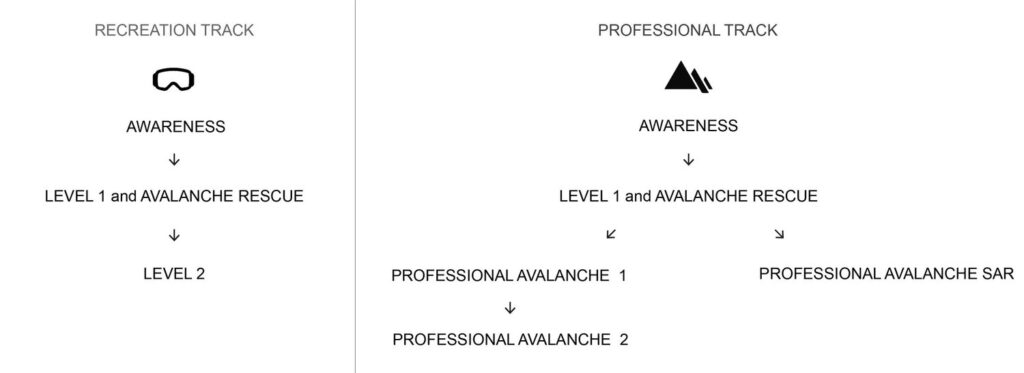
What order should you take the classes?
We suggest Awareness, Level I, Rescue, Level 2, Pro 1, ProSAR
Form your own Class!
Get your group together for a private class. Any of the classes listed below can be a private class that is customized to your group. You know your group and riding ability and we can get you the best class on your schedule. Minimum of 6 people.
Classes offered:
1. Avalanche Awareness : Keep your skills current, get in the right mindset for the season, practice transceiver skills 3-4 hours.
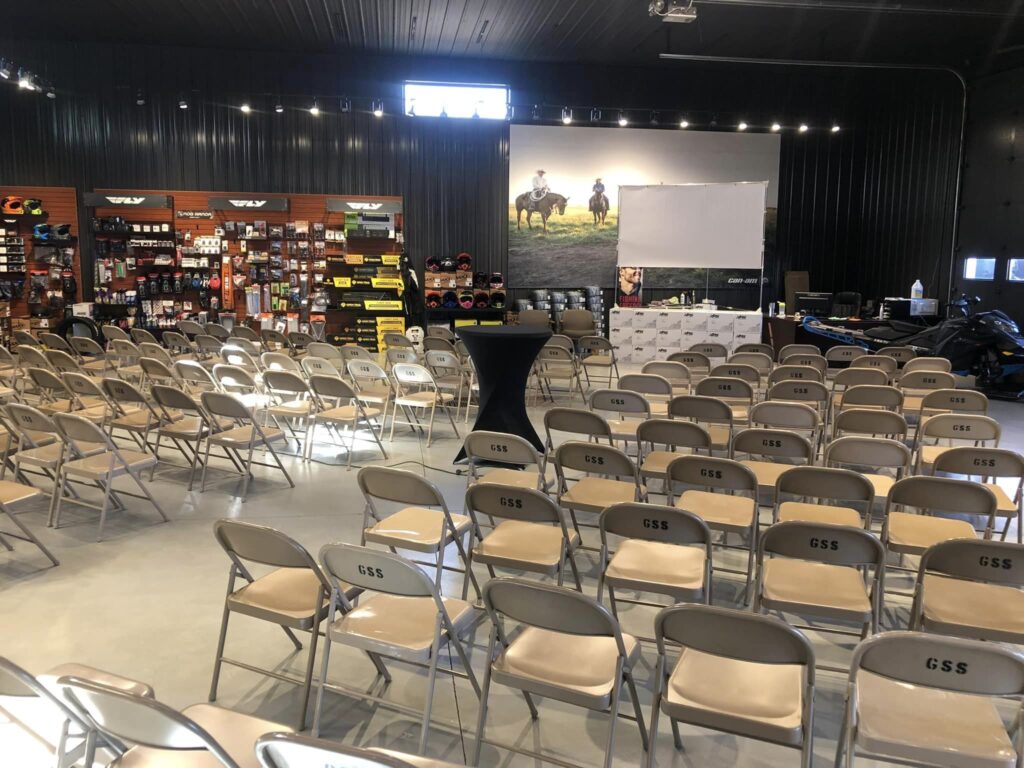
New interactive classroom session with hands-on transceiver use, demonstrations, Powerpoint and video. Emphasis on avalanche transceivers and new rescue techniques. Class will start with a review on avalanche accidents, how to prevent getting caught, the different types of avalanches and reading into avalanche forecasts. Will progress to new more advanced avalanche rescue techniques, terrain analysis, route finding, snowpack analysis and transceiver use. Students should bring their avalanche gear to class (transceiver, shovel, probe, pack). Bring your riding partners.
2. Introduction to Avalanches Field Course. I’m glad to see this excellent short course being re-introduced by the American Avalanche Association. Much knowledge and hands-on training gained in this one day on the snow course. Great for riders with limited time. Add it to your trip or weekend.
American Avalanche Association(A3) recognized class which exceeds A3 guidelines. Taught by AAA pro member, certified course provider/instructor, Mike Duffy. 8 hour class, all on-snow.
Prerequisite: None, but good idea to take an avalanche awareness class.
Course description: Full day of learning and we’ll travel by snowmobile or snow bike in class. You’ll be learning a proven morning routine that works, group dynamics, transceiver and rescue skills, identifying avalanche terrain, signs of instability, terrain traps, stability tests and participate in a rescue scenario.
Who? Anyone who hasn’t taken an on-snow avalanche class, those wanting to refresh skills after taking a level 1, and recreational riders.
3. Level I Avalanche class: This is the on-snow start to your avalanche education. A well-rounded hands-on class learning a variety of practical skills to make you more knowledgeable and safer in the backcountry
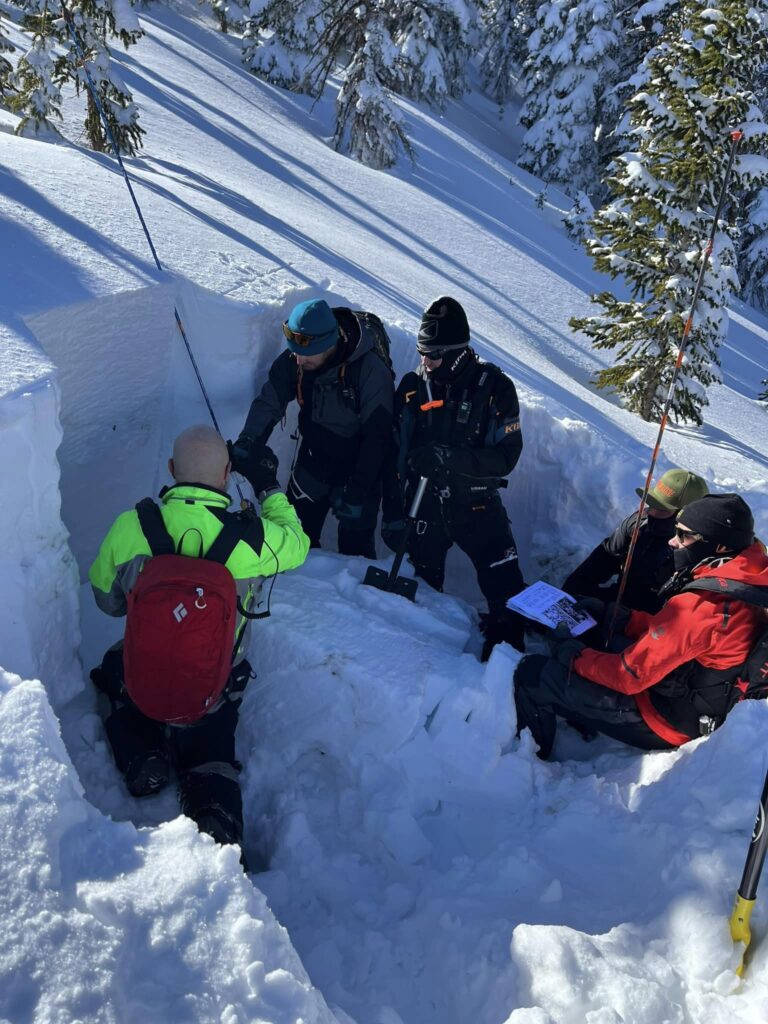
American Avalanche Association(A3) Certified Class which exceeds A3 guidelines. Taught by AAA pro member, certified course provider/instructor, Mike Duffy. 24 hour class, minimum 60% on snow.
Prerequisite: none
Who? For recreational riders, pros, guides, and search and rescue teams.
Course description: Classroom session will be online using a special level 1 version of Backcountry Ascender. Online is self-paced on your time using the fun and engaging Backcountry Ascender platform. No scheduled video meetings and more time on the snow. This is a motorized specific class and we will be traveling to areas by snowmobile or snow bike. Certified American Avalanche Association class. Level 1 is verifying the forecast and learning essential skills for the backcountry. You’ll look at the mountains differently after taking this class.
24 hour class, minimum 60% on snow. Covers: equipment, nine different types of avalanche problems, reading forecasts, effective daily plans, stability tests and analysis, transceiver use, shoveling and probing skills, rescue leadership and skills, avalanche terrain recognition, terrain traps, route finding, islands of safety, backcountry guidelines, group dynamics, communication, deep burials, multiple burials, observations, contributing factors, using snowmobiles in rescue and much more. This is a hands-on class, you learn more by doing.
4. Avalanche Rescue : Advanced rescue skills in a fast-paced one-day on snow class. 8 hours
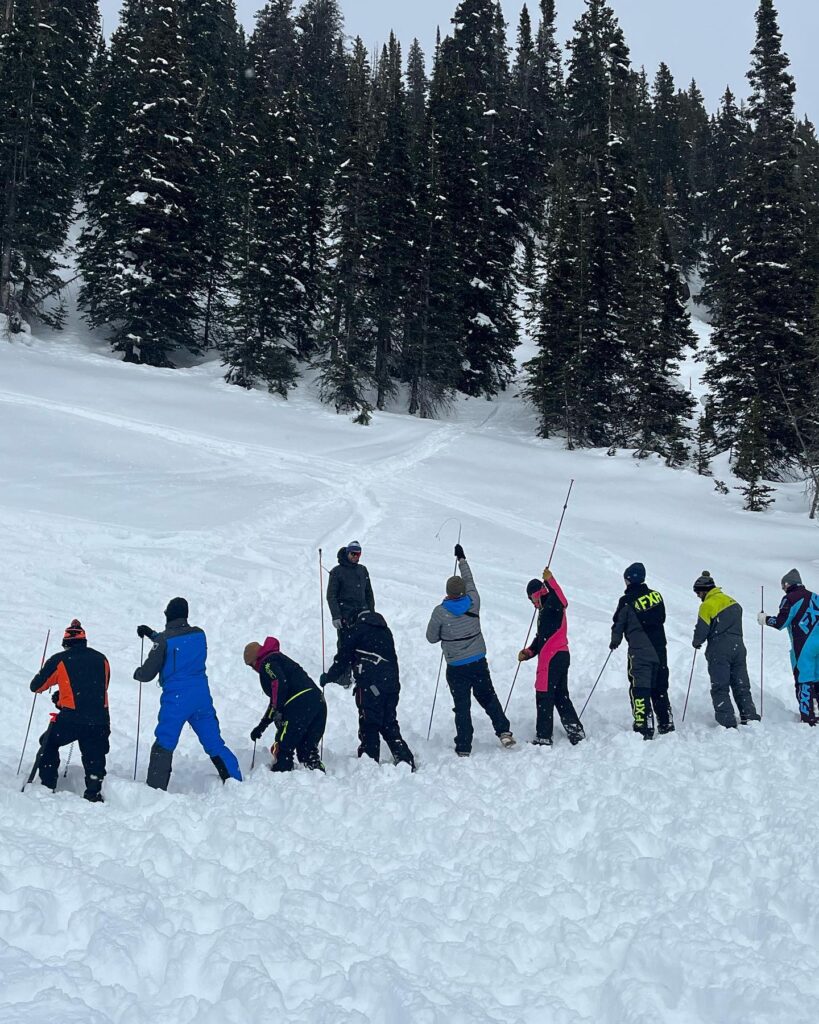
Certified class by American Avalanche Association.
Prerequisite for level II, but can be taken anytime, but we suggest taking after level I.
Who? For recreational riders, pros, guides, and search and rescue teams.
Class Description: Escape and survival techniques, rescuer safety/response, scene safety, communication, transceiver, shoveling and probing techniques, victim basic care, deep burials, close proximity rescues, RECCO, using advanced features on your transceiver, leading a rescue, rescue scenarios, timed transceiver searches and much more. These are the advanced skills that were previously taught in level II classes, is now a separate course.
5. Level II Avalanche class: This class takes your skills and understanding of snow to a new level with advanced terrain and snowpack analysis. We put you in the driver’s seat making decisions and leading a team into the backcountry. Invaluable skills so you can analyze terrain/snowpack without a forecast and route find in avalanche terrain. A must for any serious rider.
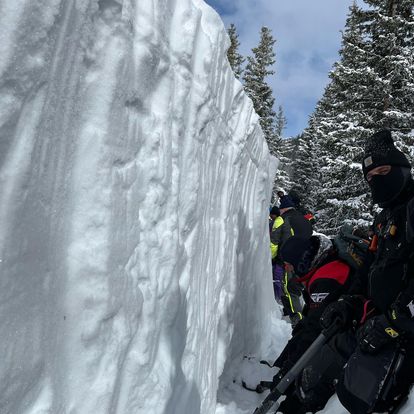
Certified class by American Avalanche Association pro member, certified instructor and course provider, Mike Duffy. 24 hour class, minimum 60% on snow.
Course description.Take your avalanche knowledge to the next level in route finding, group management, terrain and stability analysis. Learn to manage terrain according to avalanche problem(s) and the correct mindset for conditions. Stability test quantification and recording.
Prerequisite: Level I (24 hours) and Avalanche Rescue (8 hours)
The course covers applied information gathering and planning, field observations, communication, team work, decision-making and travel in avalanche terrain.
This is an intensive hands-on course that will build your confidence and skills.
6. Avalanche Camp!
What are the two best investments in mountain snowmobiling? A riding clinic and an avalanche class! The problem with many riding clinics is you get worn out too fast and regress from fatigue. We break it up, so you learn more and get more out of it. We have combined a riding clinic and avalanche class. Spread out over three days to give you a pace that doesn’t wear you out and more time to practice and improve. More time on the snowmobile at a more relaxed pace, will make you better. You’ll also learn invaluable avalanche skills.